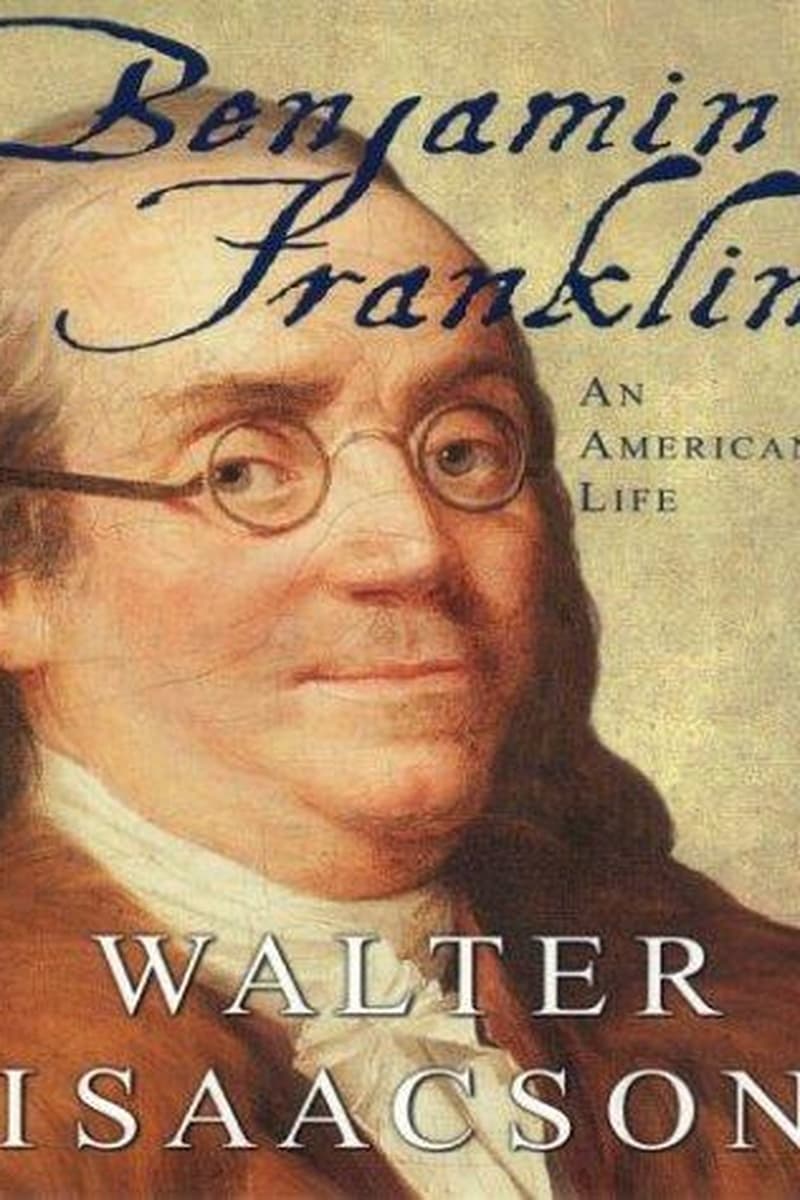
Benjamin Franklin: An American Life
By Walter Isaacson
Favorite quotes and key takeaways from this book.
“Industry and frugality,” he wrote in describing the theme of Poor Richard’s almanacs, are “the means of procuring wealth and thereby securing virtue.”
Key takeaway
Industriousness and frugality are the key to success, then once you have money you can become virtuous.
“While gambling at checkers with some shipmates, he formulated an “infallible rule,” which was that “if two persons equal in judgement play for a considerable sum, he that loves money most shall lose; his anxiety for the success of the game confounds him.” The rule, he decided, applied to other battles; a person who is too fearful will end up performing defensively and thus fail to seize offensive advantages.”
Key takeaway
If you are too attached to anything (specifically money) you will psychologically make poor decisions as a result. You don’t want to become too defensive because then you will miss out on offensive opportunities.
“The riches of a country are to be valued by the quantity of labor its inhabitants are able to purchase, and not by the quantity of silver and gold they possess.”
Key takeaway
What you can create is your true worth
“Franklin ended his “Apology for Printers” with a fable about a father and son traveling with a donkey. When the father rode and made his son walk, they were criticized by those they met; likewise, they were criticized when the son rode and made the father walk, or when they both rode the donkey, or when neither did. So finally, they decided to throw the donkey off a bridge. The moral, according to Franklin, was that it is foolish to try and avoid all criticism. Despite his “despair of pleasing everybody,” Franklin concluded, “I shall not burn my press or melt my letters.”
Key takeaway
You can’t please everybody. It’s impossible to not be criticized by someone
“The dog picked up on the lion cub and “frequently took its food by force.” But the lion grew and eventually become stronger than the dog. One day, in response to all the insults, it smashed the dog with “a stunning blow,” leaving the dog “regretting that he had not rather secured its friendship than provoked its enmity.” The parable was “humbly inscribed” to Lord Hillsborough.”
Key takeaway
Sometimes you never know who will grow up to be powerful, treat everyone with respect
“He composed it in these words, “John Thompson, hatter, makes and sells hats for ready money,” with a figure of a hat subjoined. But he thought he would submit it to his friends for their amendments. The first she showed it to thought the word “Hatter” tautologous, because followed by the words “makes hates,” which showed he was a hatter. It was struck out. The next observed that the word “makes” might as well be omitted, because his customers would not care who made the hats...He struck it out. A third said he thought the words “for ready money” were useless, as it was not the custom of the place to sell on credit. Everyone who purchased expected to pay. They were parted with; and the inscription now stood, “John Thompson sells hats.” “sells hats!” says his next friend; “why, nobody will expect you to give them away. What then is the use of that word?” It was stricken out, and “hats” followed, the rather as there was one painted on the board. So his inscription was reduced to “John Thompson,” with the figure of a hat subjoined.”
Key takeaway
Simplify. Make sure there is a reason for every descriptor
“Chess, he said, taught foresight, circumspection, caution, and the importance of not being discouraged. There was also an important etiquette to be practiced: never hurry your opponent, do not try to deceive by pretending to have made a bad move, and never gloat in victory: “Moderate your desire of victory over your adversary, and be pleased with the one over yourself.”
Key takeaway
It is important to think strategically, but don’t judge yourself against others, only judge against yourself